The Kinga Nails journal
The risks of regrowth: what happens to nail structure?
The shape and thickness of a fresh reinforcement are designed to help the nail withstand everyday use safely. As the natural nail grows, however, this balance gradually changes.
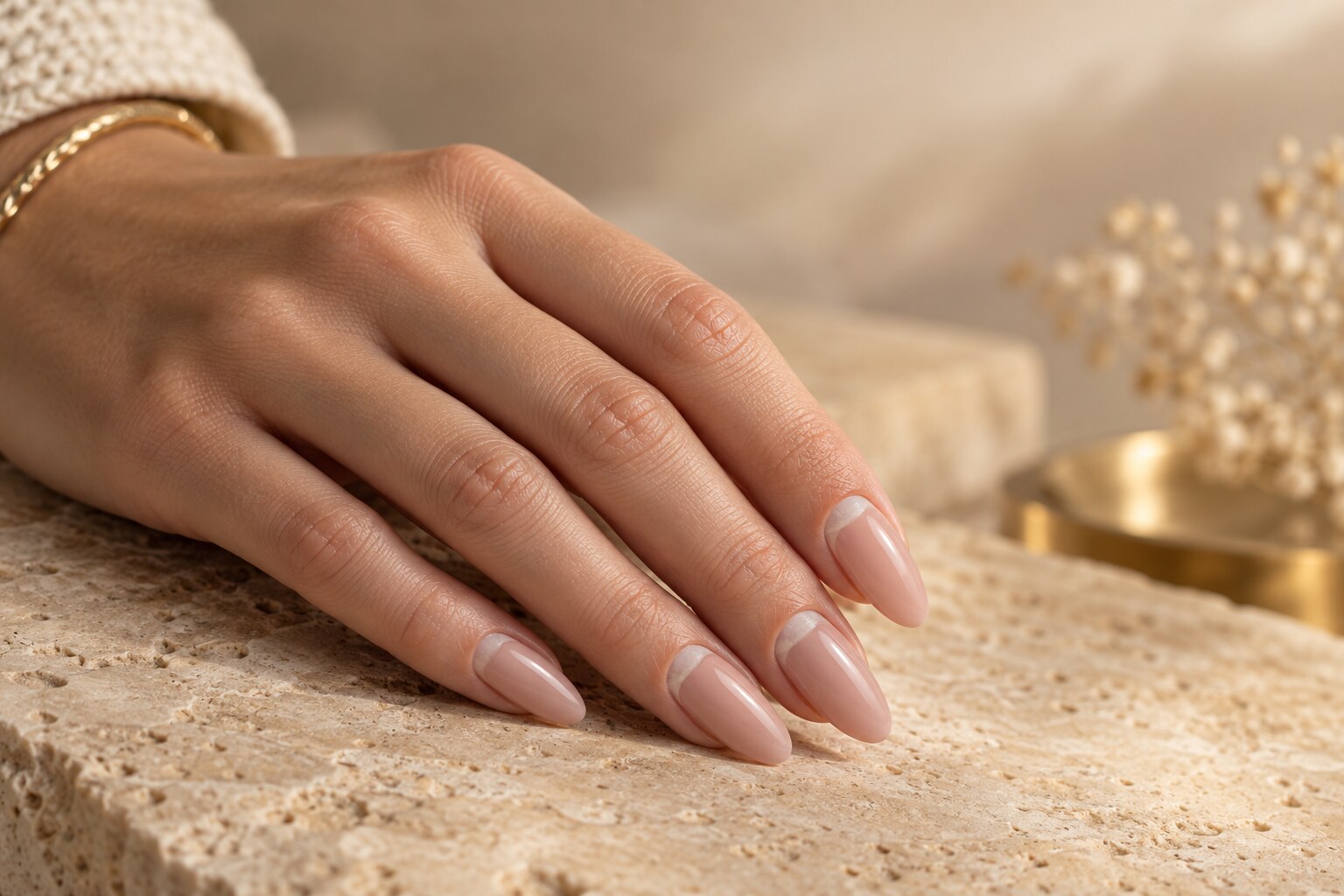
The balance point moves with the regrowth
The highest point of an extension or reinforced gel polish — the apex — is placed where a fresh set needs the greatest support. As the natural nail grows, this reinforced area moves forward and a widening band of regrowth appears near the cuticle.
The longer free edge can then act like a longer lever. An everyday knock, snag or awkward movement may place more stress on the natural nail plate than it did just after the appointment. Timely correction becomes especially important with longer nails and hands that work hard.
Lifting, cracks and trapped moisture
Overworn product is more likely to crack or lift at the edges. If a gap develops between the coating and the natural nail, it cannot be made safe by gluing it down or covering it at home. Moisture and dirt may remain in the gap, so a professional should remove the lifted area and examine the nail.
Do not tear, prise or deeply file damaged product yourself, as layers of the natural nail may come away with it. Gentle removal and identifying the cause protect the nail far better than a quick home repair.
When should you come back?
For many clients, a three-week schedule gives a beautiful and predictable result. The ideal timing also depends on growth rate, chosen length and daily use. Faster-growing nails or intensive hand use may call for an earlier check.
If you notice pain, redness, swelling, discolouration, discharge or separation of the natural nail, do not cover it with more product. Seek professional advice first and, when needed, medical or dermatological care.